Avion Water Cross Connection/Backflow Program
In 2007 Avion established an elective Cross Connection Program to comply with the new Oregon Health Authority OARs. This program has a minimal cost and allows Avion to complete the annual testing, maintenance, and reporting of residential backflow prevention assemblies (BPAs) 2” or under in size that were installed for premises isolation.
All non-residential devices and devices over 2” in size must arrange their own annual backflow test through any certified tester of their choice. We will issue a notice of required annual testing a minimum of 30-days in before the due date. The tester is required to provide Avion with the completed test within 10 days of the test date either in person or using the file upload system above.
What is a cross connection?
Any permanent or temporary connection between potable drinking water and anything that could contaminate the water supply. For example, attaching a nozzle to your garden hose and placing the nozzle into a bucket of soapy water for washing a vehicle can create a cross connection and possible health hazards.
What is backflow?
The unwanted reversal in flow of a liquid which pushes contaminated or non-potable water into the domestic drinking water system. There are two different types of backflow events. Back pressure occurs when the pressure of non-potable water is higher than the pressure in your domestic water supply and back-siphonage happens when a sudden drop or loss of pressure in a water line creates a vacuum, sucking water backwards into the domestic water supply.
Both types of backflow events are preventable. Annual testing and inspections are important for the safety of your household and your whole neighborhood!
Still have questions? Contact our Cross Connection Program Coordinator at backflow@avionwater.com or contact our office.
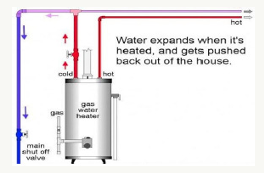
What is thermal expansion?
When water is heated it expands in volume (thermal expansion) and that must be accounted for. You can address this in your home by installing an expansion tank or valve to your system near the water heater, alleviating pressure building in the heating tank.
Expansion tanks are relatively inexpensive and do not require a drain system. Expansion valves are another common solution but require more complex plumbing solutions to drain excess water.
A frequently asked question is if a Temperature and Pressure (T&P) valve is sufficient. T&P valves are not thermal expansion devices. Many things can cause issues with a T&P valve. For example, the constant dripping of water can cause natural mineral deposits to occur creating a blockage, causing the T&P valve to become ineffective. If the water temperature increases to more than 212 ºF (111 ºC) the tank is considered to be “superheated.”
If superheated water is suddenly exposed to the atmosphere when a faucet opens, it instantly flashes into steam, and a violent reaction may occur. In rare circumstances the tank may even explode, however it is rare. Avion Water recommends that you contact a licensed professional for inspection of your T&P valve or to install a thermal expansion tank.